
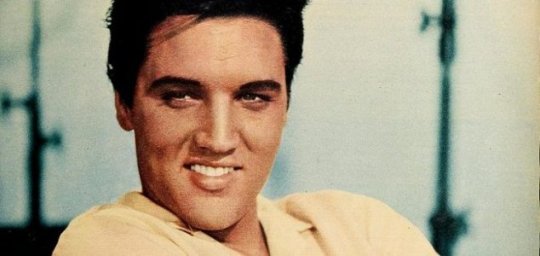
Photo credit: Public domain
One group of people I particularly enjoy working with are people with aphasia. While it’s extra challenging—people with aphasia usually don’t speak—it can be really rewarding. When someone with aphasia does speak, you know that you’re really connecting with them.
I had been with Kelly for five hours and she hadn’t uttered a word. Occasionally, she would smile, but that was about it. That was normal, and that’s what I expected. Still, I really wanted to get her to engage with me a little more than she was.
I decided to try something that I knew we hadn’t tried before: music. Now, I didn’t know what type of music that Kelly liked, but I could take a good guess. I tried the classics: 1930s swing, big band, Sinatra, Johnny Cash, Glenn Miller. These artists got a smile out of her, so I knew I was on the right track. Then, I decided to look up some music from The King himself. I typed in “Hound Dog” on my iPhone and YouTube pulled up a video of Elvis performing the song live.
Kelly’s eyes opened wider as the song began. I had placed my iPhone on the windowsill nearby, and Kelly’s eyes trained on the cellphone. She reached out a hand—which was normally shaking or picking at something on her lap—and stretched it out towards the window. I realized she wanted to hold the object making the music, so I handed her the phone.
Kelly said something. I couldn’t hear exactly what it was, so I leaned in. She was telling me a story. It was quiet at first, and a little hard to follow, but I could tell that she was including me in a narrative about something.
Suddenly, she started laughing. Like, really laughing. I started laughing, too, amazed that she seemed to engaged and lively now.
“Do you like the music I’m playing?” I asked.
“Yes, it’s so wonderful,” she smiled.


