
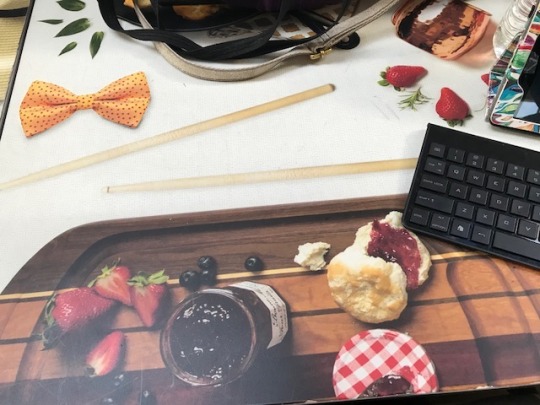
I’m sitting at the airport, typing on my Kindle Fire, and I spot something out of the corner of my eye. I reach for it, instinctively, to move it—but I cannot. It’s a bowtie, and it’s just a really crisp photograph that’s built into the tabletop. Oddly, I am slightly alarmed by this. I look at the rest of the table that I almost hadn’t noticed before.
The table is covered in pictures of picnic items, musical instruments, and outdoorsy things. This is exactly the type of table that I wouldn’t allow in dementia care.
If this weird little bowtie picture appeared real to me, imagine what it would look like to someone with dementia! I have watched my residents lean over their walkers, trying to pick up “string” off the floor, only to find that it is part of the floor. I’ve heard people with dementia talk about “falling leaves outside,” only to notice that what they are talking about is the woman in front of them with the fall-patterned blouse.
When you have dementia, your brain changes. Your depth perception is impaired, along with your general understanding and perception of the world around you.
While a table like this is in an airport and not a dementia care community, this table reminds me of some furniture I have seen in dementia care. I’ve worked in communities where they announce proudly that we are “getting new furniture,” only to bring in couches and chairs covered in elaborate patterns. The patterns are confusing and distracting to people with dementia, and the fabrics the design team has chosen get ruined in a matter of weeks by bathroom accidents and drink spills.
Dementia care design is a really unique, interesting part of interior design. It’s important to keep little things like this in mind when we are working with people who have dementia.


